01
Why shading in Dunkeld isn't a house-wide decision
Dunkeld was laid out as a township in 1904.1 That one fact does more work in a shading conversation here than anything else, because it means two rooms in the same house can be a century apart in the way they meet the sun: an original manor with deep reveals and small panes, and — very often bolted onto the back of it — a glass wing built decades later to look at the garden.
The older parts of these houses were generally planned with the main rooms opening north, for winter sun. The newer parts face whichever way the view runs. So the brief here is almost never "blinds for the house" — it's a room-by-room negotiation between period windows that want to keep their proportions and new glazing with a genuine heat problem. Then there's the canopy: jacaranda and oak over these streets change the answer again, and being deciduous, they change it twice a year.
The desk gets you to a shortlist. The room gets you to a specification.
02
The light here: two numbers that decide everything
Johannesburg sits at roughly 26.2 degrees south and 1,753 m above sea level.23 Latitude decides where the sun goes. Altitude decides how hard it lands.
Where it goes
At midsummer the sun stands almost directly overhead at noon — about 87 degrees above the horizon here.4 By midwinter that falls to roughly 40 degrees, and it stays in the northern sky all day, which is why panels and living rooms alike get pointed north.5
| Season | Height at noon | Rises | Sets |
|---|---|---|---|
| Midsummer (Dec) | ≈ 87° — nearly vertical | ≈ 26° south of east | ≈ 26° south of west |
| Equinox (Mar / Sep) | ≈ 64° | Due east | Due west |
| Midwinter (Jun) | ≈ 40° — low, raking | ≈ 26° north of east | ≈ 26° north of west |
That last column is the part most people miss. In high summer the sun doesn't rise due east — it swings well south of it, and sets well south of west.6 So a south-facing window that sits in comfortable shade all year takes direct low sun early and late for a few weeks either side of Christmas. If a south room is unexpectedly hot in December, that's why.
How hard it lands
Ultraviolet intensity climbs roughly ten percent per thousand metres of elevation, and Johannesburg's UV index regularly runs 11 to 13 on clear summer days, strongest between 10am and 2pm from October to March.78 That is a fabric-and-finish problem before it is a comfort one — and fading isn't caused by UV alone: visible light and heat do their share, and ordinary glass stops only part of it.9 A blind that cuts glare is also protecting your floors.
And the weather it arrives with
Rain falls almost entirely between October and March as afternoon thunderstorms, and the Highveld is one of the country's hail hot spots — most likely October to December.1011 Winter is the opposite: dry, bright, and cold enough at night for light frost.12 So anything fitted outside needs a plan for that October storm, and anything fitted inside is also part of your winter warmth.
03
Elevation by elevation
Walk the house with the compass on your phone and note which way each window faces. That one note changes the product more than the room's function does.
NorthProtect it — but don't block it
Your winter asset. Nearly-overhead summer sun is comparatively easy to intercept — a deep eave or a folding-arm awning cuts most of it, while the low 40-degree winter sun still slides in underneath and warms the room for free. Full blockout on the north face is usually the wrong instinct: you spend all winter fighting for light you paid to remove. Filtering, not blocking.
WestThe hard one
Late afternoon, the hottest part of the day, and the sun is low enough to come in almost horizontally under any overhang. This is where interior blinds struggle honestly: once the light is on your blind, the energy is already inside the room. External shading intercepts solar radiation before it reaches the glass, which is why it outperforms an internal product on heat.1314
EastSame geometry, cooler hour
Low-angle morning sun, but the house is still cool from the night, so it reads as glare rather than heat. East bedrooms are where blockout genuinely earns its place — and sunrise shifts about 50 degrees across the year, so a blind mounted tight to the frame for a winter sunrise can miss the summer one entirely.
SouthQuiet all year — except for a few weeks
Steady indirect light, the easiest wall to live with, and the reason so many studies end up here. Privacy and winter warmth matter more than glare on this side. Just don't assume "south means never any sun" — see the December exception above.
Johannesburg carries over ten million trees and is often described as one of the largest man-made urban forests in the world.15 Jacaranda and oak leaf up for the hot months and drop for the cold ones — free seasonal shading, timed almost perfectly. But a tree only shades the windows it stands in front of. That's why two windows on the same Dunkeld wall routinely need two different answers, and why we specify per opening rather than per house.
04
What we'd specify here, and why it beats the alternative
None of these is "the best blind". Each is a trade, stated underneath.
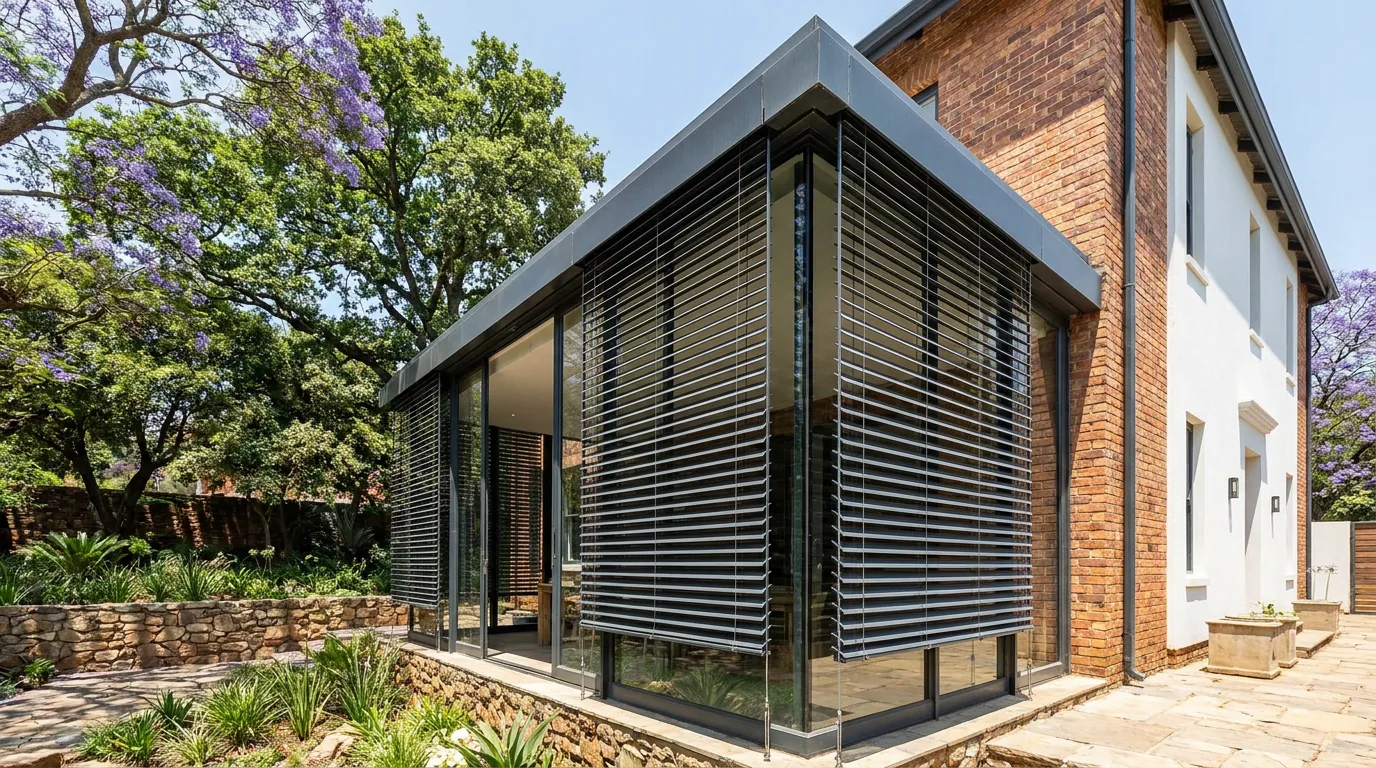
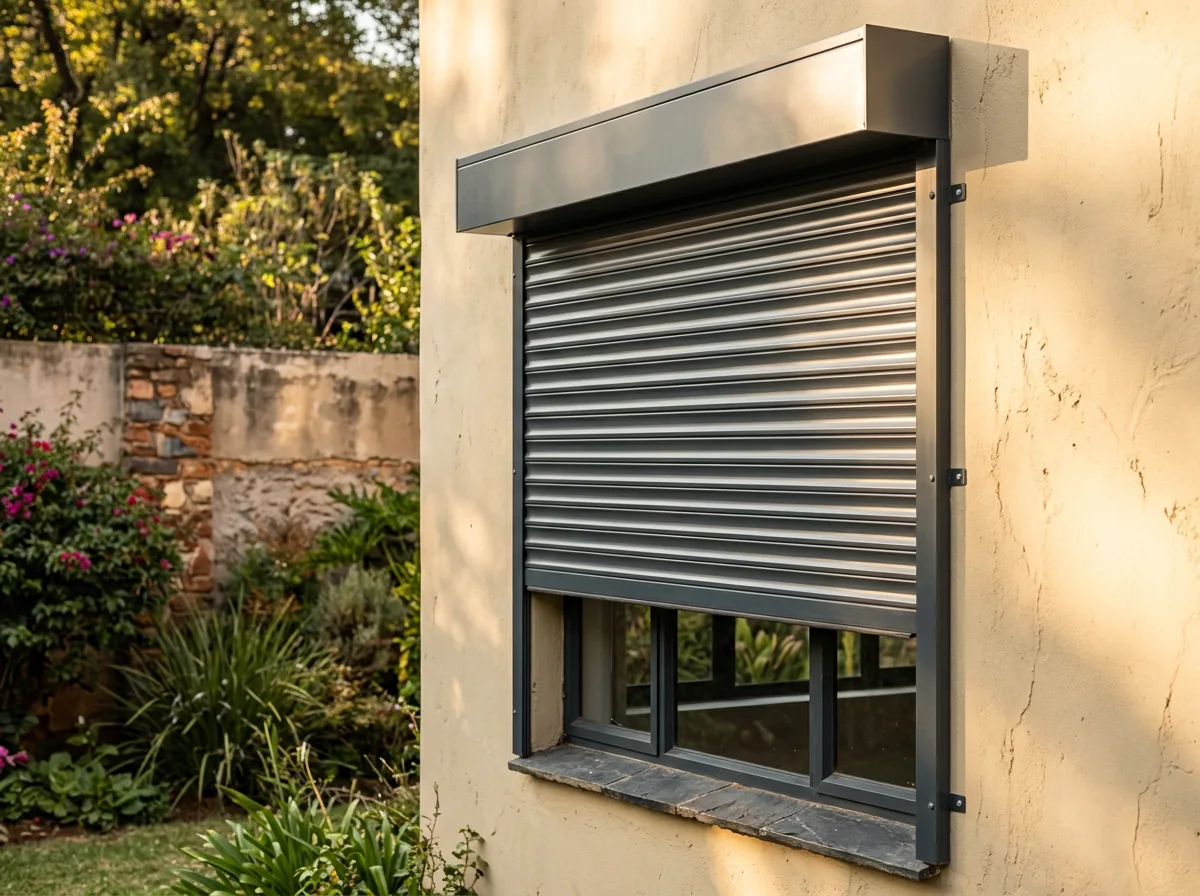
West-facing glassExternal venetian blinds or roller shutters, ahead of an interior blockout roller
The reason is where the energy gets stopped. An interior blockout absorbs the sun inside the room and re-radiates it; an external product holds it off the pane in the first place.13 Between the two exterior options: external venetians keep the garden view, because you tilt the slats and still see through; roller shutters close the opening completely and add real insulation and blackout, but you lose the view while they're down. These are shading shutters — sun, heat and glare control on the outside of the glass. They are not security-rated shutters; that's a different product, which we can quote on request.
The tradeExterior products cost meaningfully more than the interior equivalent, need a sound substrate to fix into, and on an older facade may need the heritage conversation in section 05. If the budget only stretches to one exterior product, put it on the west.
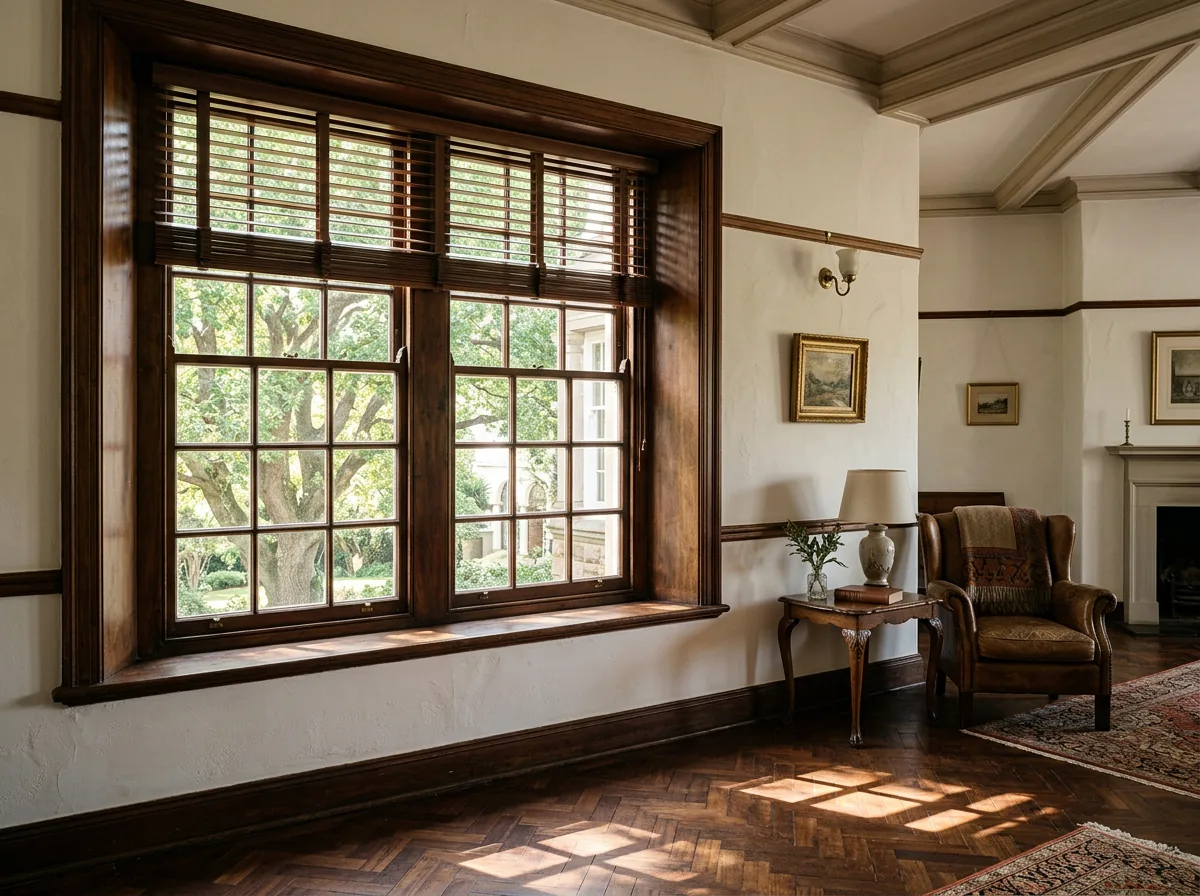
Original sash & casement windowsTimber venetian blinds, over aluminium
Proportion is the argument. A period window is a composition of small panes and a deep reveal; timber slats sit inside that reveal and read as joinery, where aluminium reads as a modern insert. Timber also tilts, so you can steer low east or west light up onto the ceiling instead of choosing between open and shut.
The tradeTimber doesn't love steam or constant damp. In a bathroom, scullery or laundry we'd swap to aluminium venetians — same tilt control, no warping. Timber is also heavier, which matters on a very wide opening.
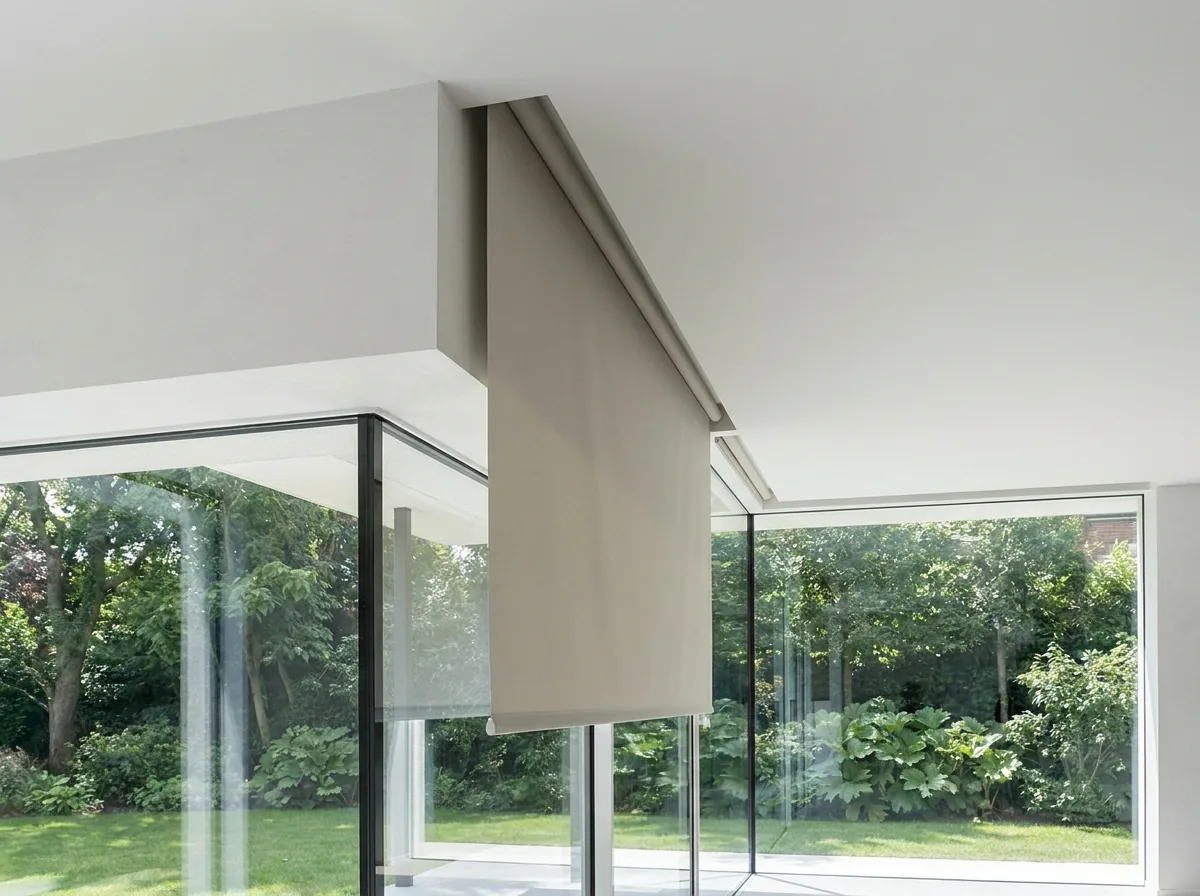
New glass wings & double volumesConcealed / recessed roller systems, motorised
On a frameless glass wall the least visible intervention wins, and a roller that lives in a ceiling slot vanishes entirely when it's raised — the architecture keeps doing the talking. It's also the practical answer: on a three-and-a-half metre drop there is no chain a person can reach, so motorisation stops being a luxury.
The tradeRecessing needs a bulkhead and it needs deciding early — retrofitting into a finished ceiling means opening that ceiling. Where that isn't possible, a slim surface cassette colour-matched to the ceiling gets close to the same line without the building work. Not invisible. Close.
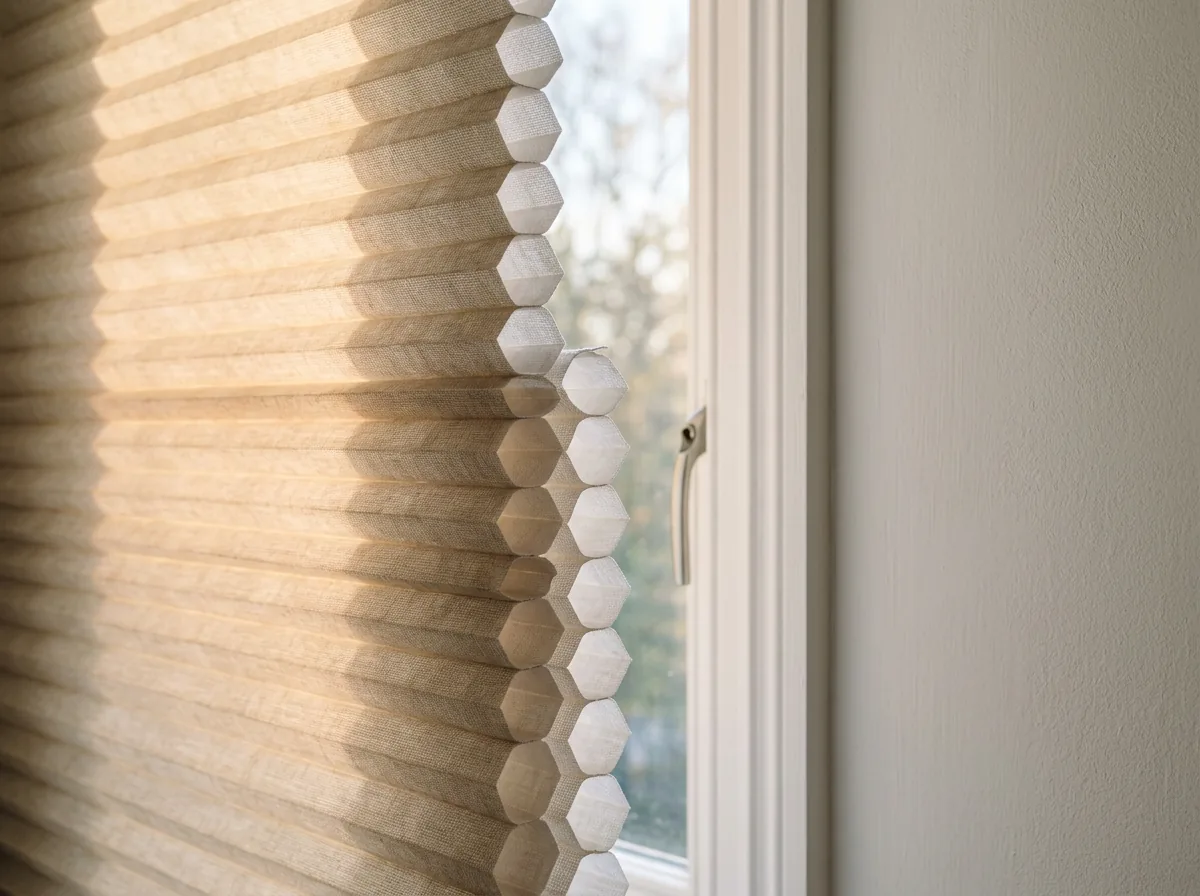
Bedrooms, nurseries, rooms that swing hot and coldCellular honeycomb blinds
The air trapped inside the cells does insulating work no single-layer fabric does — worth having in a Highveld winter where the night drops toward freezing while the day is warm and bright.12 Specified top-down/bottom-up, you also get privacy at the bottom of the window and daylight at the top.
The tradeHoneycomb is not as happy on a very wide span as a roller, and it's a softer product — a hard-wearing family room may be better served by a blockout roller on the same window.
Everyday garden-facing glassSunscreen roller blinds
A single smooth sheet of open-weave fabric on a tube: it cuts glare while you keep looking at the garden, which is the whole point of a garden room. Where a north or east elevation only needs the edge taken off, this is usually the entire answer.
The tradeSunscreen reduces heat, it doesn't stop it. On a west elevation, pair it with something outside the glass or accept the compromise knowingly. And if you need true darkness, that's a blockout roller or a day-night double.
Terraces & entertaining areasFolding-arm awnings on a wind sensor
Retractable shade that folds itself away before an October thunderstorm arrives, rather than fabric left stretched out in a hailstorm.10 A walled Dunkeld garden is usually gentler on an awning than an open stand — exactly the sort of thing that changes the arm specification.
The tradeAn awning shades the terrace, not the room behind it. If the glass onto that terrace is the real problem, it's a companion to a blind, not a replacement.
Tick what sounds right for your house
Nothing is sent anywhere by ticking these. They simply travel with you — into the window schedule below, and into the enquiry form if you decide to book a measure, so you don't retype anything.
Nothing shortlisted yet
Optional
Want this marked up for your house?
Tell us which rooms are the problem and we'll email you this same guide with your elevations noted against it — which of the sections above apply to your windows, and which don't.
It's a document, not a sales call. Nobody phones you off the back of it unless you ask us to.
05
The 60-year question — real, and specific to a suburb this old
Under section 34 of the National Heritage Resources Act, no structure older than 60 years may be altered without a permit from the provincial heritage authority — and "alter" covers work affecting a building's appearance, not only its structure. Age alone triggers it; the house doesn't have to be a declared heritage site.1617 In Gauteng that authority is PHRA-G, whose approval is sought before building plans go to the City of Johannesburg.18
Dunkeld was laid out in 1904, so many of its original houses are well past that threshold. In practice, for window coverings:
- Blinds fitted inside an existing reveal are not building work, and this doesn't apply to them.
- Anything fixed to the outside of an older facade — external venetians, external roller shutters, an awning on a street elevation — changes the appearance of the structure. On a house past 60 years, worth confirming before anything is ordered.
- In neighbouring Illovo, where much of the stock is clusters and apartments, the equivalent constraint isn't heritage at all — it's the body corporate's rules on what the building looks like from outside.
We're not heritage consultants and won't pretend to be. But we'll raise it at the measure rather than after manufacture, and we're happy to work from your architect's drawings if there's already a professional on the job.
06
What we'd still need to check on site
Everything above can honestly be worked out from a desk. Here is what cannot:
- The true reveal depth — measured in three places. Whether a blind fits inside the reveal, and whether a concealed cassette hides in it, comes down to millimetres. Old plaster is rarely square, so we measure top, middle and bottom, and the smallest number counts.
- What is actually behind the plaster. An external venetian or a shutter headbox needs a substrate that will hold it for years. Old brick, a cavity, a lintel in the wrong place or a timber lath ceiling all change the fixing — sometimes the product.
- Where the power comes from for a motor. On a concealed ceiling system that's a design decision, not a detail: battery or hard-wired, where the transformer sits, whether a chase can be cut. Best resolved before the ceiling closes.
- Real wind exposure on the terrace. Awning span, projection and arm choice depend on how exposed that corner is. A walled Dunkeld garden and an open stand two streets away are different specifications.
- Which windows the trees actually cover, and when. Standing in the room at the hour that bothers you is the only reliable way to know whether the canopy already solves half the problem — and whether it will still be doing that in June.
That's the honest reason for the visit. It's free, and you get a written per-window quote out of it whether or not you go ahead.